
How LinkedIn's AI Shift Is Rewarding Authenticity and Expertise
The platform that built its reputation on professional networking is rewiring how content reaches audiences, and the shift deserves attention from marketers, communications teams, and content creators.
✒️ Paul Rigden
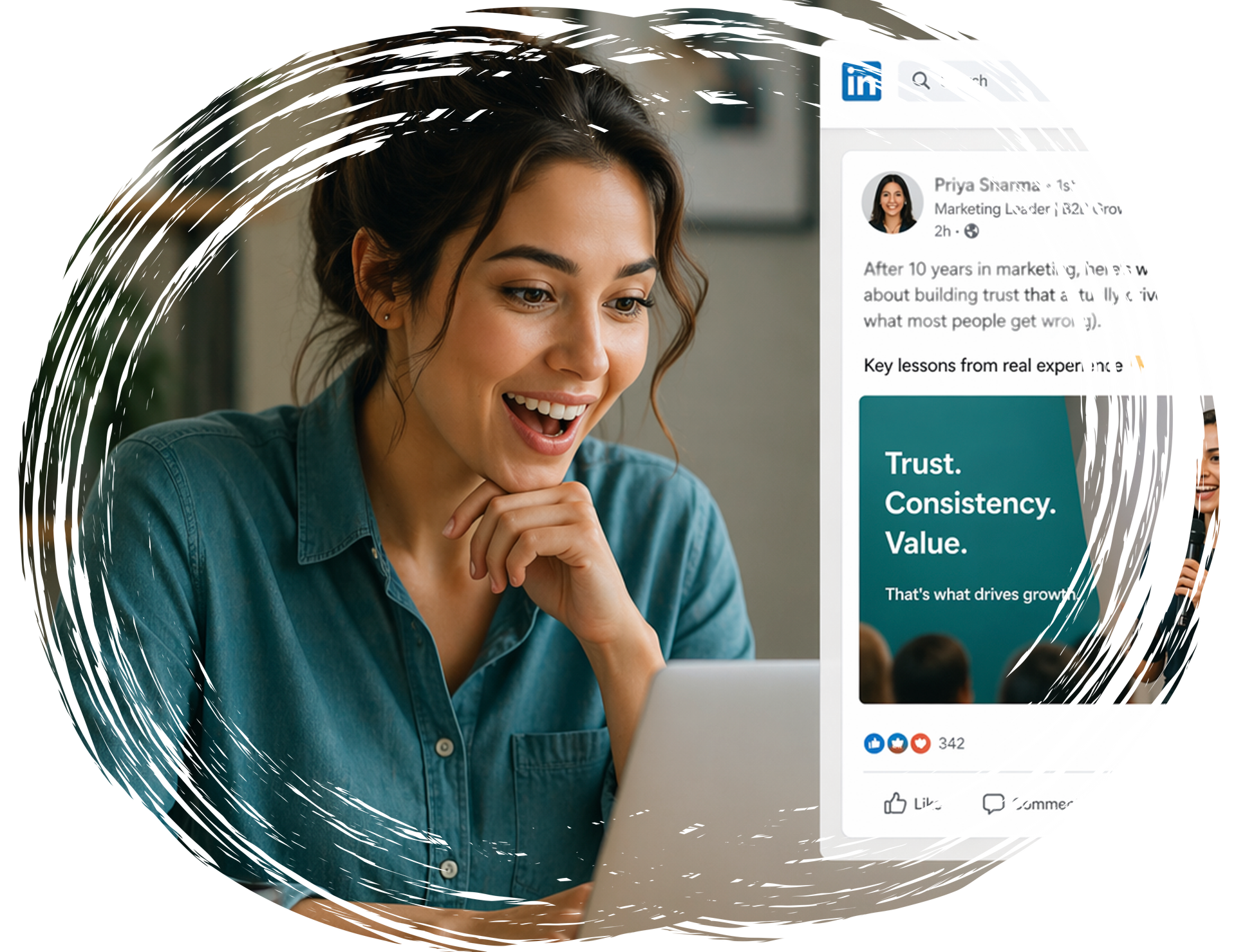
LinkedIn's latest AI changes appear to be more than a simple algorithm tweak. Reports suggest the platform is putting more weight on expertise, consistency, and meaningful signals like saves, rather than relying as heavily on surface-level engagement alone.
A VP of Sales recently published a detailed post about enterprise deal structures. It received 47 likes, 20 saves, and eight comments on its first day. Three weeks later, it was still appearing in feeds. Meanwhile, a motivational quote with 2,000 reactions disappeared within 24 hours. That comparison points to a broader shift in what LinkedIn seems to reward.
According to research cited by Martech, one save can give a LinkedIn post five times more reach than one like and can be twice as meaningful as a comment. The same reporting says a saved post can increase the chance that someone follows the author by 130%. That does not mean saves create reach on their own, but it does suggest they reinforce content the system already sees as valuable.
Martech reports that LinkedIn recently deployed a system called 360Brew, described there as an AI model with 150 billion parameters that evaluates what people write, not just how others react to it. Even if that specific technical claim is best treated as reported rather than independently confirmed here, the broader pattern across the source set is consistent: LinkedIn is emphasizing relevance, quality, and useful discussion.
"
Content grounded in specific experience, practical examples, and real perspective is more likely to generate the kinds of signals LinkedIn appears to value
That creates an unusual opening for early movers. Martech says AuthoredUp tracked more than 621,000 posts and found that 98% of users saw reach decline after the change it attributes to 360Brew. It also says that 6 to 12 months often pass between a platform making technical changes and those changes becoming common knowledge. If that pattern holds, teams that adjust now may gain an advantage before the broader market catches up.
The opening now shapes distribution
One of the clearest takeaways is that LinkedIn's AI appears to rely heavily on early signals when interpreting a post. Martech says those signals are strongest in the headline and first paragraph, and Sprout Social similarly notes that relevance plays a major role in who sees a post.
If a post opens with something vague like "Just had an interesting thought about productivity," the system may read it as generic before it reaches the more substantive idea later on. By contrast, an opening like "Three procurement teams cut vendor onboarding time by 60% using automated compliance verification" signals specificity, expertise, and practical value much earlier. That appears to improve the odds that the post is categorized and distributed more effectively.
For marketers, the practical implication is straightforward: lead with what you know. Put the evidence, lesson, or result first. LinkedIn's own content guidance emphasizes clarity, relevance, meaningful insight, and genuine expertise over sheer volume, which supports that approach.
Concentrated authority beats scattered credibility
Martech also argues that LinkedIn is not only evaluating individual posts, but also looking for coherence across a person's broader activity, including what they publish and where they comment. Sprout Social supports the broader idea that topic relevance, audience fit, and engagement patterns influence who sees a post.
A Director of Product Marketing who posts about launches, positioning, and go-to-market strategy while commenting on SaaS pricing and competitive analysis presents a coherent signal. The same person bouncing between marketing advice, leadership philosophy, and cryptocurrency speculation presents a less consistent area of authority. The clearer your territory, the easier it is for the platform to understand where your content fits.
This does not mean creators have to stay locked into one tiny niche forever. It means they benefit from building a recognizable lane. LinkedIn's own quality-content guidance reinforces that idea by emphasizing unique expertise, relevant examples, and problem-solving value.
Saves and comments carry more weight when they reflect value
The article's emphasis on saves remains well supported. Martech presents saves as a stronger signal than likes, and LinkedIn's own quality-content guidance helps explain why: people tend to keep and return to content that is clear, useful, and insight-rich.
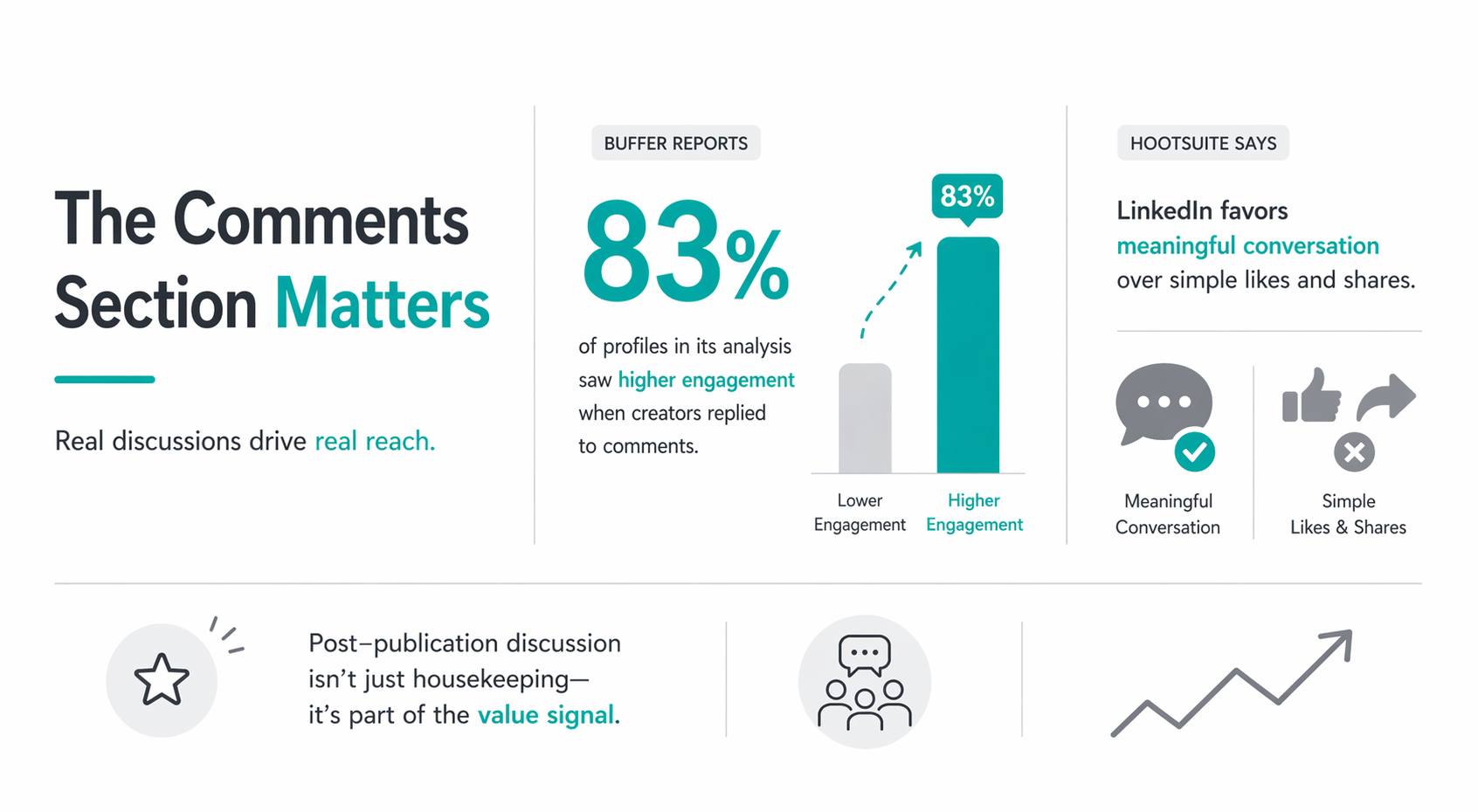
The comments section also matters, especially when it becomes a place for real discussion. Buffer says roughly 83% of profiles in its analysis saw higher engagement when creators replied to comments, and Hootsuite says LinkedIn favors meaningful conversation over simple likes and shares. That means post-publication discussion is not just housekeeping. It can be part of the value signal.
That does not mean every comment boosts performance equally. A quick "Thanks for sharing!" is not the same as answering a real question or expanding on a practical point. The stronger takeaway is that useful interaction seems to reinforce useful content.
Authenticity matters more when content has to prove its value
This is also where authenticity becomes more important, though that point is best made carefully. The source set strongly supports the idea that LinkedIn is rewarding clearer expertise, relevance, originality, and meaningful insight. Hootsuite explicitly says the algorithm rewards human expertise and originality over low-quality, generic writing, and LinkedIn's own quality-content page stresses genuine expertise and real insight.
What the evidence does not clearly prove is that LinkedIn is formally detecting or penalizing AI-written content. A safer and better-supported conclusion is this: content grounded in specific experience, practical examples, and real perspective is more likely to generate the kinds of signals LinkedIn appears to value.
What marketers should do next
The practical changes are not complicated, but they do require discipline: lead with the insight, not the setup; stay consistent in a recognizable area of expertise; create posts people may want to save or return to; treat comments as an extension of the content; and prioritize useful perspective over generic inspiration.
For teams trying to act on this quickly, the opportunity is not just to post more. It is to monitor relevant developments in real time, identify the ones that fit your expertise, and turn them into useful content while the conversation is still active. That is the kind of workflow this shift appears to reward.